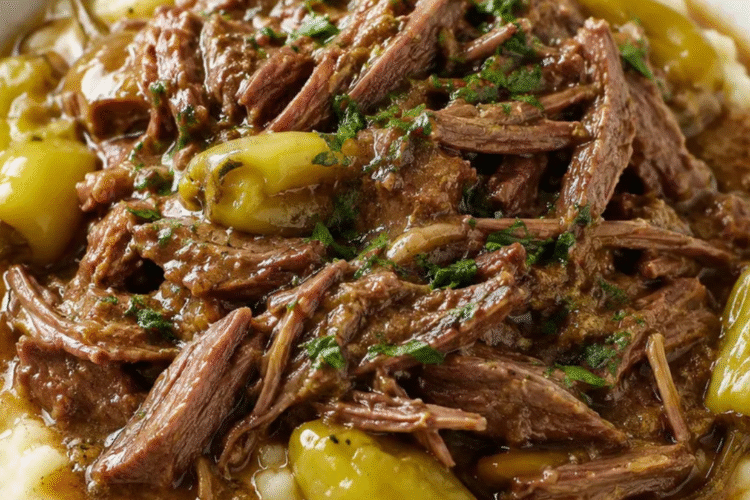
You know that moment when you walk through your front door after a punishing day, and something smells so good it almost knocks you sideways? That’s what Mississippi Pot Roast does. Every single time. It doesn’t announce itself — it just quietly fills your entire home with a warm, buttery, tangy aroma that makes everyone in the house suddenly appear in the kitchen asking, “What’s for dinner?”
The best part? You did almost nothing to make it happen.
This dish has earned its reputation as one of the most shared, most pinned, and most raved-about slow cooker recipes in American home cooking — and once you make it yourself, you’ll completely understand why.
What Exactly Is Mississippi Pot Roast?
If you haven’t heard of it yet, Mississippi Pot Roast is a slow-cooked beef roast made with just five ingredients: a chuck roast, a stick of butter, pepperoncini peppers, a packet of ranch seasoning, and a packet of au jus gravy mix. That’s it. No chopping vegetables for an hour, no complicated sauce reductions, no culinary degree required.
The dish was originally created by Robin Chapman of Ripley, Mississippi. She adapted a pot roast recipe to suit her family’s taste — specifically to dial back the heat — and the result was something far greater than she likely imagined. After her recipe appeared in a church cookbook and was later shared online, it spread like wildfire. Food writers picked it up. Home cooks across the country tried it and were floored. Today, it consistently ranks among the most searched slow cooker recipes on the internet.
What makes it stand apart from a traditional pot roast isn’t just the short ingredient list. It’s the way those five ingredients interact over hours of low, gentle heat. The butter melts into the beef drippings. The ranch seasoning blooms into something deeper than it tastes from the packet alone. The pepperoncini release a mild, briny tang that cuts through the richness of the fat. The au jus mix ties it all together into a glossy, intensely savory cooking liquid that doubles as a ready-made gravy.
You don’t add water. You don’t add broth. You trust the process — and the process rewards you every time.
Choosing the Right Cut of Beef
Before you even open your slow cooker, your most important decision is the cut of meat you buy. Get this right, and everything else falls into place.
Chuck roast is your go-to. It’s cut from the shoulder area of the cow, which means it’s packed with connective tissue and intramuscular fat — exactly what you want for low-and-slow cooking. As the hours tick by, that connective tissue breaks down into gelatin, giving the meat its signature silky, pull-apart texture. A lean cut simply cannot replicate this.
Look for a chuck roast that’s:
- 3 to 4 pounds — the sweet spot for a standard 6-quart slow cooker
- Well-marbled — visible threads of fat running through the meat, not just sitting on top
- At least 1.5 inches thick — thin roasts dry out even in a slow cooker
If you can’t find chuck roast, a blade roast or shoulder roast will work in a pinch. Avoid eye of round, sirloin tip, or anything labeled “lean” — those cuts are built for fast, dry-heat cooking and will turn chalky and dry after hours in the slow cooker.
The Full Mississippi Pot Roast Recipe
Ingredients
| Ingredient | Amount | Notes |
|---|---|---|
| Chuck roast | 3–4 lbs | Well-marbled, at least 1.5 inches thick |
| Unsalted butter | 1 stick (½ cup) | Placed whole on top of the roast |
| Pepperoncini peppers | 5–8 whole | Jarred; add 2–3 tbsp of the brine too |
| Ranch seasoning mix | 1 packet (1 oz) | Hidden Valley or store brand both work |
| Au jus gravy mix | 1 packet (1 oz) | Substitute: brown gravy mix if needed |
Step-by-Step Instructions
Step 1 — Sear your roast (optional, but don’t skip it) Heat two tablespoons of neutral oil in a cast iron skillet over high heat until it just starts to smoke. Pat your chuck roast completely dry with paper towels — moisture is the enemy of a good sear. Place the roast in the hot skillet and don’t touch it for two to three minutes. You’re looking for a deep, mahogany-brown crust on each side. This step takes an extra ten minutes, but it builds a layer of flavor that you’ll taste in every single bite.
Step 2 — Build your base Place the seared roast directly into your slow cooker. Sprinkle the entire ranch seasoning packet evenly over the top. Then do the same with the au jus mix.
Step 3 — Add the peppers Nestle five to eight whole pepperoncini peppers around and on top of the roast. Pour two to three tablespoons of the brine from the jar over everything — this is liquid gold that adds brightness and depth.
Step 4 — Crown it with butter Place the full stick of butter directly on top of the roast. Don’t slice it, don’t melt it first — just set it on top and let it slowly melt down over the meat as it cooks.
Step 5 — Cook low and slow Put the lid on, set it to LOW, and walk away for 8 to 10 hours. If you’re short on time, HIGH for 5 to 6 hours works — but LOW produces noticeably better results. The difference in texture is real.
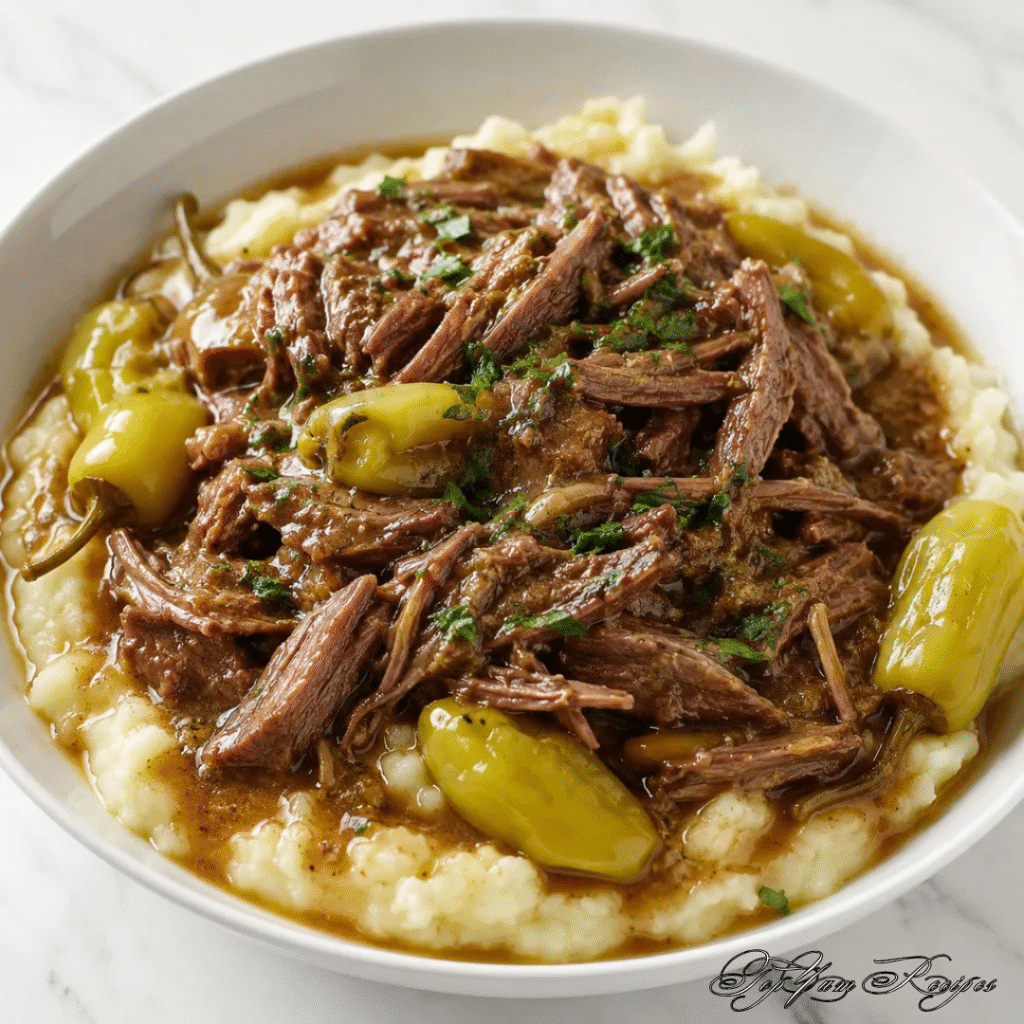
Step 6 — Shred and serve When the cook time is up, the roast should practically fall apart when you look at it sideways. Use two forks to pull the beef into generous chunks. Stir the cooking liquid to combine everything into a rich, self-made au jus. Taste it. Try not to eat it straight from the slow cooker with a spoon.
Cooking Method Comparison
You’re not limited to a slow cooker. Here’s how the other methods stack up:
| Method | Temperature | Cook Time | Result |
|---|---|---|---|
| Slow Cooker (LOW) | ~190°F | 8–10 hours | Silkiest, most tender |
| Slow Cooker (HIGH) | ~300°F | 5–6 hours | Tender, slightly less rich |
| Dutch Oven (Oven) | 275°F | 4–5 hours | Excellent, slightly firmer |
| Instant Pot | High Pressure | 90 min + 20 min NR | Good, less fall-apart |
If you’re using an Instant Pot, add ¼ cup of beef broth — pressure cookers need liquid to function safely, unlike the slow cooker version which generates its own.
Why the Flavor Works: A Quick Breakdown
You might be skeptical that five basic ingredients can produce something genuinely outstanding. Here’s the science behind why they do:
The butter doesn’t just add richness — it acts as a basting agent throughout the entire cook, slowly melting over the meat and keeping the surface from drying out while enriching the cooking liquid.
The ranch seasoning contains a carefully balanced blend of dried herbs (dill, parsley, chives), garlic, onion, and buttermilk powder. Over ten hours of heat, these aromatics bloom and deepen in ways they never could in a quick recipe.
The pepperoncini bring two critical things: a mild, vinegary tang that cuts through the fat, and a very gentle background heat (100–500 Scoville units, for reference — far milder than a jalapeño). They keep the dish from feeling heavy.
The au jus mix provides glutamates — the same compounds that give beef broth its savory depth — and forms the backbone of the gravy.
The chuck roast brings the collagen. After hours at the right temperature, that collagen converts to gelatin, giving the cooking liquid a silky, almost glossy body that no store-bought gravy can replicate.
Every component has a job. Together, they do something greater than the sum of their parts.
What to Serve With Mississippi Pot Roast
The cooking liquid this roast produces is essentially a ready-made gravy — thick, savory, and deeply beefy. Your side dishes should be built to handle it.
The classics:
- Creamy mashed potatoes — the undisputed champion pairing; a mountain of buttery mash with that au jus ladled over the top is one of the great simple pleasures of home cooking
- Buttered egg noodles — twirl them through the cooking juices and you’ve got a bowl of pure comfort
- Crusty dinner rolls — for the sole purpose of soaking up every last drop of gravy from your bowl
Vegetable sides that hold their own:
- Roasted carrots with honey and thyme
- Garlic butter green beans
- Creamed corn
- Southern-style coleslaw — the cool crunch is a wonderful contrast to the richness of the beef
Creative ways to use your leftovers:
- French dip sandwiches — pile shredded beef on a toasted hoagie roll with provolone, with the au jus on the side for dipping
- Pot roast tacos — flour tortillas, shredded beef, pickled red onion, a squeeze of lime, and fresh cilantro
- Loaded baked potatoes — split potato, shredded beef, sour cream, chives, shredded cheddar
- Pot roast hash — a skillet breakfast with crispy potatoes, leftover beef, and a fried egg on top
Tips for Getting It Perfect Every Time
Even a simple recipe has room for error. Keep these in mind:
- Don’t add extra liquid. This is the most common mistake first-timers make. Trust the butter and the peppers — they create more than enough cooking liquid.
- Use unsalted butter. Between the ranch packet, the au jus mix, and the brine, there’s already significant sodium in this dish. Salted butter pushes it over the edge.
- Resist the urge to lift the lid. Every time you do, you lose heat and add roughly 30 minutes to your cook time. Set it and genuinely forget it.
- Don’t rush the shred. Let the roast rest in the cooking liquid for 10 minutes after the heat goes off. It absorbs moisture back into the meat fibers as it relaxes.
- Skim the fat if needed. Chuck roast is generously marbled, which is great for flavor — but the cooking liquid can get an oily layer on top. Tilt the slow cooker insert and skim it off with a spoon before serving, or use a fat separator.
Storage and Meal Prep
Mississippi Pot Roast is one of the best candidates for batch cooking you’ll find. It doubles easily (use an 8-quart slow cooker), stores beautifully, and arguably tastes better the next day once the flavors have had time to fully settle.
| Storage Method | Container | How Long It Keeps |
|---|---|---|
| Refrigerator | Airtight container with juices | 3–4 days |
| Freezer | Freezer-safe bags or containers | Up to 3 months |
Always store the shredded beef with the cooking liquid — it keeps the meat moist and carries the flavor. When reheating, a splash of beef broth helps loosen everything back up. Reheat gently on the stovetop over medium-low heat, or in the microwave in 90-second intervals, stirring in between.
Variations Worth Trying
Once you’ve nailed the original, the formula becomes a template:
Mississippi Chicken — swap the chuck roast for bone-in, skin-on chicken thighs. Same five ingredients, same method. Cook on LOW for 4–6 hours. The chicken shreds just as beautifully and soaks up the ranch-butter-pepper flavors like a sponge.
Mississippi Pork Roast — use a bone-in pork shoulder (Boston butt) for pulled pork with a serious flavor upgrade over the standard version. Cook on LOW for 8–10 hours.
Keto/Low-Carb Version — the original recipe is already very low in carbohydrates. Simply serve it over cauliflower mash or spiralized zucchini instead of regular mashed potatoes.
Gluten-Free Version — swap the standard au jus packet for a certified gluten-free version. Most ranch packets are naturally gluten-free, but always check the label.
Frequently Asked Questions About Mississippi Pot Roast
Can I make Mississippi Pot Roast without a slow cooker? Absolutely. Use a Dutch oven with a tight-fitting lid in a 275°F oven for 4 to 5 hours. The result is excellent — slightly firmer than the slow cooker version but packed with the same flavors.
Why is my Mississippi Pot Roast still tough after cooking? It needs more time. Chuck roast must reach an internal temperature of around 200–205°F for the collagen to fully convert to gelatin. If it’s still tough, it simply isn’t done yet — put the lid back on and give it another hour or two.
Is Mississippi Pot Roast spicy? Not at all. Pepperoncini peppers sit between 100 and 500 on the Scoville scale — far milder than banana peppers and almost imperceptibly hot in a dish this large. What they contribute is tangy brightness, not heat. Children tend to love this dish.
Can I put the roast in frozen? Food safety guidelines advise against placing a frozen roast directly in a slow cooker, as the meat spends too long in the temperature danger zone (40°F–140°F). Always thaw your roast in the refrigerator overnight before cooking.
How many people does this recipe feed? A 3 to 4 pound chuck roast comfortably serves 6 to 8 people, especially when paired with generous sides like mashed potatoes or noodles.
Can I make this recipe ahead of time? Yes — and you should. Mississippi Pot Roast is one of those rare dishes that genuinely improves overnight as the flavors deepen and meld. Make it the day before, refrigerate it with the cooking liquid, and reheat gently before serving.
The Bottom Line
You don’t need a long grocery list or a culinary background to put something extraordinary on the table tonight. Mississippi Pot Roast proves that clearly. Five ingredients, a slow cooker, and a few hours are all that stand between you and one of the most satisfying meals you’ll ever serve.
It’s the kind of recipe that earns you compliments every single time — the kind people text you about the next morning asking if you’ll make it again soon. Once it’s part of your regular rotation, it’s hard to imagine cooking without it.
So here’s your call to action: make it this week. Pick up a chuck roast on your next grocery run, grab those five ingredients, and let your slow cooker do the heavy lifting. Then come back and tell us how it went — drop your variation, your side dish pairing, or your family’s reaction in the comments below. This recipe has a way of becoming your recipe the moment you make it your own.
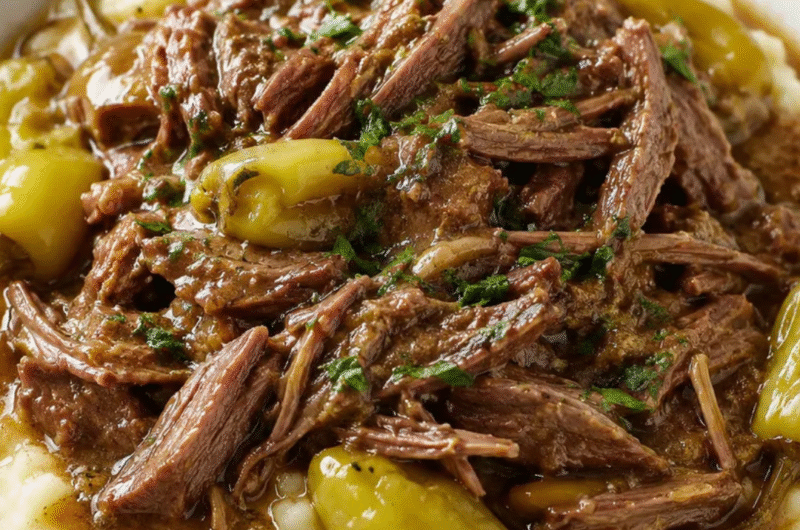
Mississippi Pot Roast: The Only Slow Cooker Recipe You’ll Ever Need
Course: Dinner DelightsCuisine: AmericanDifficulty: Easy6
servings10
minutes6
hours6
hours10
minutesIngredients
Chuck roast
3–4 lbs
Well-marbled, at least 1.5 inches thickUnsalted butter
1 stick (½ cup)
Placed whole on top of the roastPepperoncini peppers
5–8 whole
Jarred; add 2–3 tbsp of the brine tooRanch seasoning mix
1 packet (1 oz)
Hidden Valley or store brand both workAu jus gravy mix
1 packet (1 oz)
Substitute: brown gravy mix if needed
Directions
- Step 1 — Sear your roast (optional, but don’t skip it)
Heat two tablespoons of neutral oil in a cast iron skillet over high heat until it just starts to smoke. Pat your chuck roast completely dry with paper towels — moisture is the enemy of a good sear. Place the roast in the hot skillet and don’t touch it for two to three minutes. You’re looking for a deep, mahogany-brown crust on each side. This step takes an extra ten minutes, but it builds a layer of flavor that you’ll taste in every single bite. - Step 2 — Build your base
Place the seared roast directly into your slow cooker. Sprinkle the entire ranch seasoning packet evenly over the top. Then do the same with the au jus mix. - Step 3 — Add the peppers
Nestle five to eight whole pepperoncini peppers around and on top of the roast. Pour two to three tablespoons of the brine from the jar over everything — this is liquid gold that adds brightness and depth. - Step 4 — Crown it with butter
Place the full stick of butter directly on top of the roast. Don’t slice it, don’t melt it first — just set it on top and let it slowly melt down over the meat as it cooks. - Step 5 — Cook low and slow
Put the lid on, set it to LOW, and walk away for 8 to 10 hours. If you’re short on time, HIGH for 5 to 6 hours works — but LOW produces noticeably better results. The difference in texture is real. - Step 6 — Shred and serve
When the cook time is up, the roast should practically fall apart when you look at it sideways. Use two forks to pull the beef into generous chunks. Stir the cooking liquid to combine everything into a rich, self-made au jus. Taste it. Try not to eat it straight from the slow cooker with a spoon.
Notes
- Tips for Getting It Perfect Every Time
Even a simple recipe has room for error. Keep these in mind:
Don’t add extra liquid. This is the most common mistake first-timers make. Trust the butter and the peppers — they create more than enough cooking liquid.
Use unsalted butter. Between the ranch packet, the au jus mix, and the brine, there’s already significant sodium in this dish. Salted butter pushes it over the edge.
Resist the urge to lift the lid. Every time you do, you lose heat and add roughly 30 minutes to your cook time. Set it and genuinely forget it.
Don’t rush the shred. Let the roast rest in the cooking liquid for 10 minutes after the heat goes off. It absorbs moisture back into the meat fibers as it relaxes.
Skim the fat if needed. Chuck roast is generously marbled, which is great for flavor — but the cooking liquid can get an oily layer on top. Tilt the slow cooker insert and skim it off with a spoon before serving, or use a fat separator.