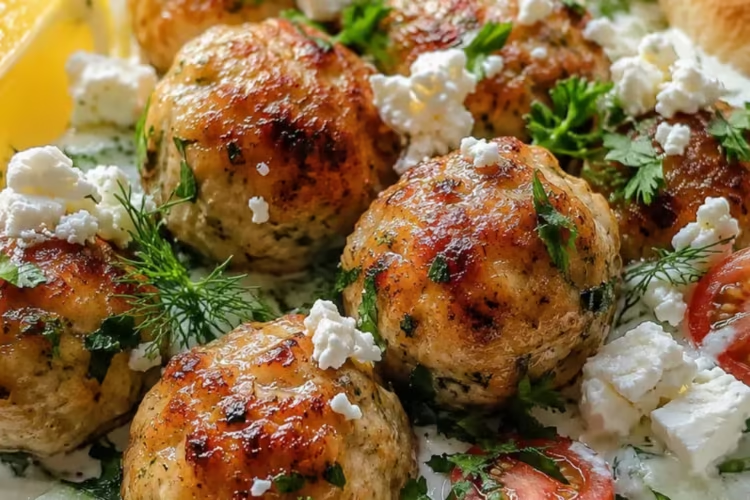
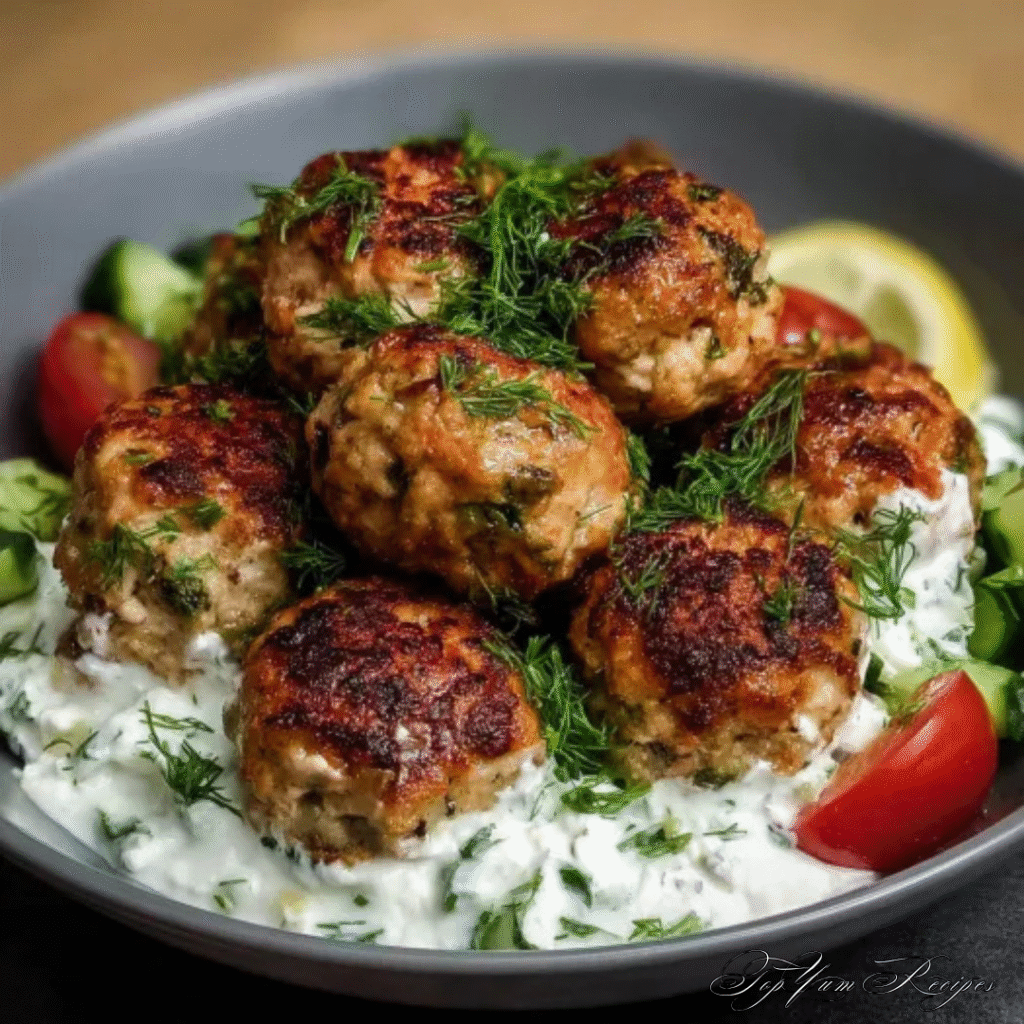
Picture your weeknight kitchen: shoes kicked off by the door, someone hovering near the stove asking what’s for dinner before you’ve even set your bag down. You want something that tastes like more effort than it actually took — bright, herby, a little indulgent — without turning your evening into a two-hour production. That’s exactly what these Greek chicken meatballs with tzatziki give you.
You get juicy, well-seasoned meatballs packed with garlic, lemon, and fresh herbs, paired with a cool, tangy tzatziki that cuts through the richness in every bite. It’s the kind of meal you can pull off on a Tuesday and still feel proud enough to serve on a Saturday. No special equipment, no obscure ingredients, and no standing over the stove for an hour while everyone waits.
Below, you’ll find everything you need: the exact ingredients, a step-by-step method, tips for keeping your meatballs from drying out, and enough serving ideas to keep this recipe in rotation without it ever feeling repetitive. Once you try it, you’ll understand why it earns a permanent spot in your dinner lineup.
Why This Greek Chicken Meatballs with Tzatziki Recipe Works
You don’t need a trip to a Greek taverna to get that fresh, sun-soaked flavor at your own table. This recipe leans on a few smart choices that make it work every single time, even on your busiest nights.
Ground chicken gives you a lighter meatball than beef or pork, but it can turn dry fast if you’re not careful — so this recipe builds in insurance against that with a soft breadcrumb-and-milk mixture, called a panade, along with grated onion for extra moisture. Fresh dill, mint, and oregano bring that unmistakable Greek flavor, and a hit of lemon zest keeps everything tasting bright instead of heavy. Then there’s the tzatziki: a cool, garlicky yogurt sauce that balances the richness of the meatballs and adds a boost of protein and probiotics to your plate.
Here’s what you’re getting when you make this recipe:
- A dinner that’s actually fast. You’re looking at about 30 minutes from start to finish.
- A meal that fits real eating habits. It’s naturally high in protein and easy to make gluten-free.
- Something that works for your whole week. These meatballs hold up beautifully in the fridge or freezer, so you can prep once and eat well for days.
- A dish that pleases a crowd. Even picky eaters tend to come around once they taste these.
The Mediterranean-style eating pattern this recipe draws from — lean proteins, fresh herbs, olive oil, and yogurt — is one that nutrition researchers consistently point to as one of the more balanced ways to eat, and this dish gives you an easy entry point into that style of cooking without any complicated techniques. You’re not swapping out flavor for the sake of eating well here; the herbs and lemon do most of the heavy lifting, so you never end up with a plate that tastes like a compromise.
Ingredients for Juicy Greek Chicken Meatballs
Before you start cooking, it helps to see exactly what you’re working with. You’ll need two separate ingredient lists here: one for the meatballs and one for the tzatziki. Neither is complicated, and you likely already have several of these items in your kitchen.
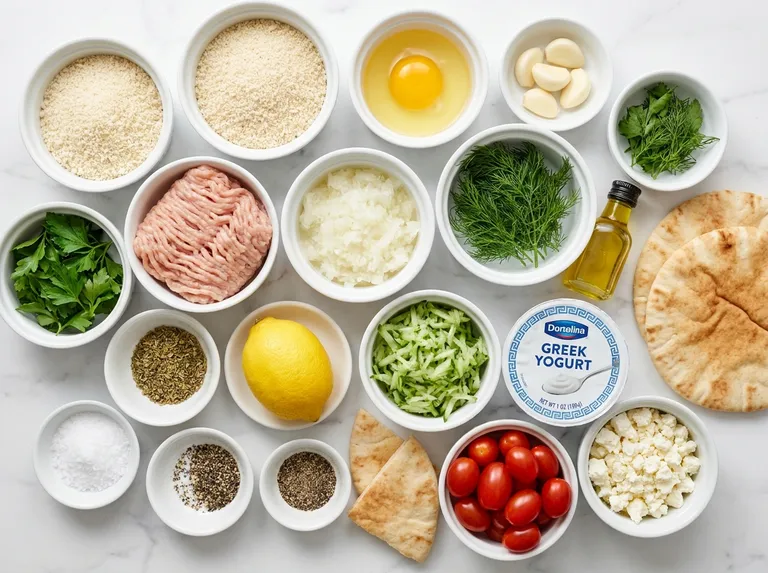
Meatball Ingredients
| Ingredient | Amount | Why You Need It |
|---|---|---|
| Ground chicken (thigh or thigh/breast blend) | 1 lb | Thigh meat stays juicier than all-breast meat |
| Panko breadcrumbs | ⅓ cup | Keeps the meatballs tender instead of dense |
| Milk or Greek yogurt | 2 tbsp | Softens the breadcrumbs and adds moisture |
| Egg | 1 large | Holds everything together |
| Garlic, minced | 2 cloves | Builds the savory base |
| Red onion, grated | 2 tbsp | Adds moisture and a touch of sweetness |
| Fresh dill, chopped | 2 tbsp | Gives you that signature Greek flavor |
| Fresh mint, chopped | 1 tbsp | Brightens the whole mixture |
| Dried oregano | 1 tsp | Classic Greek seasoning |
| Lemon zest | 1 tsp | Adds a fresh, citrusy lift |
| Feta cheese, crumbled (optional) | ¼ cup | Adds tang and a creamy bite |
| Salt & pepper | To taste | Rounds everything out |
Fresh Tzatziki Sauce Ingredients
| Ingredient | Amount | Why You Need It |
|---|---|---|
| Greek yogurt (full-fat) | 1 cup | Gives you a thick, tangy base |
| Cucumber, grated & drained | ½ cup | Draining it keeps your sauce from turning watery |
| Garlic, minced | 1 clove | Adds the classic tzatziki punch |
| Fresh dill, chopped | 1 tbsp | Herbal, fresh finish |
| Lemon juice | 1 tbsp | Balances the richness with acidity |
| Olive oil | 1 tsp | Adds a smooth, rounded flavor |
| Salt | To taste | Ties the sauce together |
Ingredient Swaps You Can Make
If you’re cooking around a dietary need or you simply don’t have something on hand, you’ve got options:
- Swap ground turkey in for the chicken at a 1:1 ratio
- Use a dairy-free yogurt (coconut or almond-based) for the tzatziki if you’re avoiding dairy
- Reach for gluten-free breadcrumbs or oats in place of panko
How to Make Greek Chicken Meatballs with Tzatziki
Once your ingredients are prepped, the actual cooking process moves quickly. Here’s how to walk through it step by step.
Step 1: Prep the Meatball Mixture
Start by soaking your breadcrumbs in the milk for about 5 minutes — this small step matters more than it seems, because it keeps your meatballs from drying out in the oven or pan. Once that’s done, combine the chicken, soaked breadcrumbs, egg, garlic, onion, herbs, lemon zest, and feta in a large bowl.
Mix everything with your hands, but stop as soon as it comes together. Overmixing packs the meat too tightly, and that’s one of the fastest ways to end up with a tough, rubbery meatball instead of a tender one.
Step 2: Shape the Meatballs
Use a cookie scoop or your hands to portion the mixture into evenly sized balls. Even sizing matters here — it keeps everything cooking at the same rate, so you’re not left with some meatballs burnt on the outside while others are still raw in the middle.
Meatball Size Guide
| Size | Approx. Yield | Cook Time |
|---|---|---|
| 1.5-inch (small) | 24 meatballs | 12–14 minutes |
| 2-inch (medium) | 16–18 meatballs | 15–18 minutes |
Step 3: Choose Your Cooking Method
You’ve got three solid ways to cook these, and the right one depends on what you’re in the mood for and how much time you have.
| Method | Time | Texture | Best For |
|---|---|---|---|
| Oven-baked (400°F) | 18–20 minutes | Even cooking, hands-off | Meal prep and bigger batches |
| Pan-seared | 12–15 minutes | Crispy, golden exterior | Fast weeknight dinners |
| Air fryer (380°F) | 10–12 minutes | Extra crispy, less oil | Small batches |
Whichever method you choose, use a meat thermometer to confirm your meatballs have reached an internal temperature of 165°F (74°C) — that’s the point at which ground chicken is fully cooked and safe to eat.
Step 4: Make the Tzatziki
While your meatballs cook, put together the tzatziki. Grate your cucumber, then squeeze out as much liquid as you can using a clean kitchen towel or cheesecloth — this step is what keeps your sauce thick instead of runny. Stir the drained cucumber together with the yogurt, garlic, dill, lemon juice, olive oil, and salt, then let it chill in the fridge for at least 15 minutes before serving. That resting time lets the flavors settle and deepen.
Pro Tips for the Juiciest Greek Meatballs Every Time
A handful of small habits separate dry, forgettable meatballs from the kind you’ll want to make on repeat:
- Stick with thigh meat, or a thigh-and-breast blend, since it holds moisture better than lean breast meat alone
- Don’t skip the panade — that breadcrumb-and-milk soak is doing real work
- Grate your onion instead of dicing it, so it blends in and releases moisture as it cooks
- Mix gently and stop as soon as the ingredients come together
- Pull your meatballs based on internal temperature, not just how golden they look on the outside
Serving Suggestions for Greek Chicken Meatballs with Tzatziki
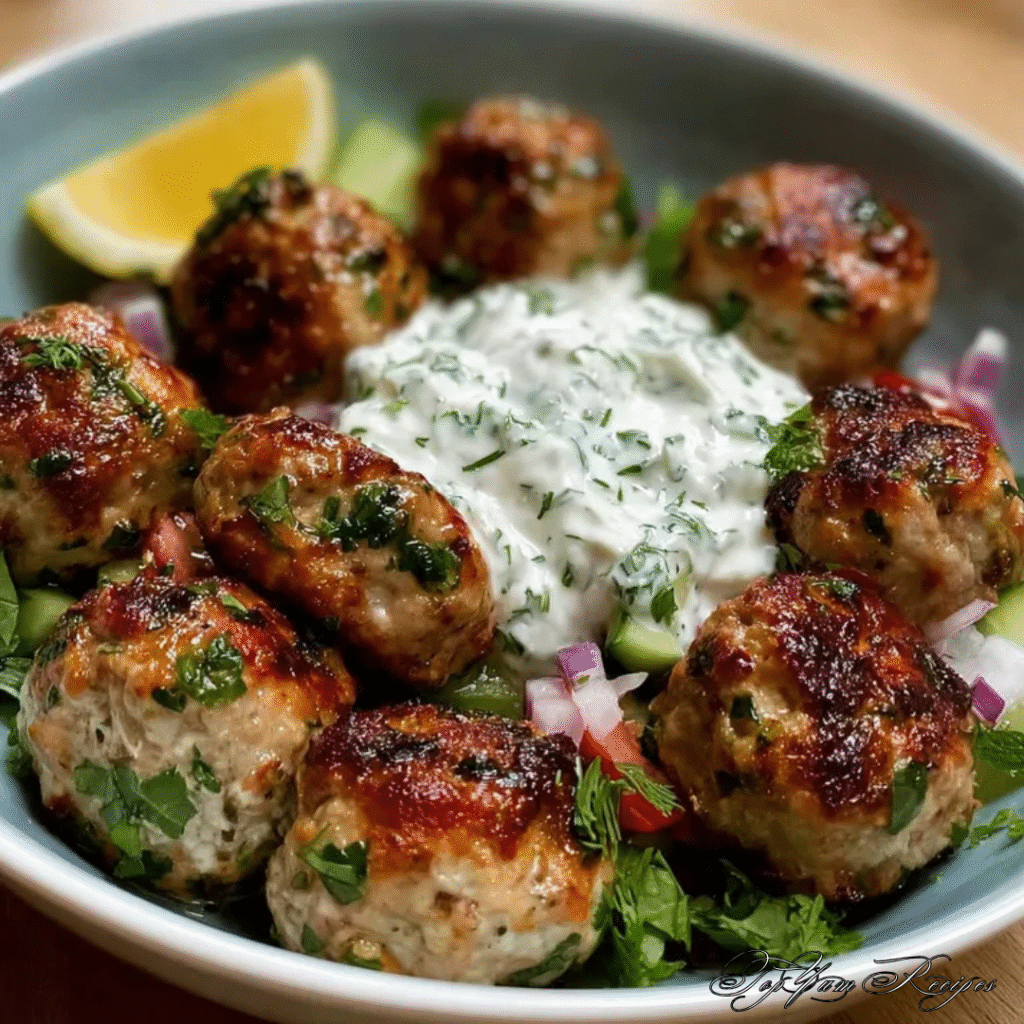
One of the best things about this recipe is how many directions you can take it. Once your meatballs and tzatziki are ready, here are a few ways to build your plate:
- Stuff them into warm pita with lettuce, tomato, and thinly sliced red onion
- Serve them over a grain bowl with rice or quinoa, cucumber, and cherry tomatoes
- Set them out on a mezze platter alongside hummus, olives, and pita chips for a laid-back dinner or gathering
- Skewer them with toothpicks and set the tzatziki out as a dip for an easy appetizer spread
Storage, Make-Ahead, and Freezing Instructions
If you like to cook once and eat well for several days, this recipe is built for that.
Refrigerator Storage
Once cooked, your meatballs will keep in an airtight container in the fridge for up to 4 days. The tzatziki holds up for about 3 days — it’s best when it’s fresh, since the cucumber continues to release moisture over time.
Freezer Instructions
For longer storage, freeze your cooked, fully cooled meatballs in a single layer on a tray until firm, then transfer them to a freezer bag or container. They’ll keep well for up to 3 months this way. When you’re ready to eat them, reheat straight from frozen in a 350°F oven for about 15 minutes.
One thing to keep in mind: tzatziki doesn’t freeze well. The yogurt base tends to separate once it thaws, so it’s worth making a fresh batch whenever you’re ready to eat.
Why Draining the Cucumber Is the Step You Shouldn’t Skip
If you’ve ever made tzatziki at home and ended up with something closer to cucumber soup than sauce, there’s a good chance you skipped the draining step. Cucumbers are made up mostly of water, and once you grate one, that water starts pulling free almost immediately. If you stir it straight into your yogurt, it waters everything down within minutes, even if the sauce looked thick when you first mixed it.
Give yourself a couple of extra minutes here. After grating your cucumber, place it in a clean kitchen towel, cheesecloth, or even a fine-mesh strainer, and press or squeeze firmly until the liquid stops running out. You’ll be surprised by how much comes out of what looks like a small amount of cucumber. That one habit is the real difference between tzatziki that tastes like it came from a good Greek restaurant and tzatziki that separates on your plate.
Nutritional Information for Greek Chicken Meatballs with Tzatziki
Here’s a general breakdown per serving, based on 4 meatballs with about 2 tablespoons of tzatziki. Keep in mind these are estimates — your exact numbers will shift slightly depending on the ingredients and brands you use.
| Nutrient | Approx. Amount |
|---|---|
| Calories | ~280 kcal |
| Protein | ~28 g |
| Carbohydrates | ~9 g |
| Fat | ~14 g |
| Fiber | ~1 g |
This dish gives you a solid amount of protein per serving, which is part of why it tends to keep you satisfied longer than a typical meatball dinner.
Recipe Variations & Substitutions
You can adjust this recipe to fit your household without losing what makes it work.
Dietary Adaptations
- Gluten-free: Use gluten-free breadcrumbs or ground oats in place of panko
- Dairy-free: Swap in a coconut- or almond-based yogurt for your tzatziki
- Low-carb: Serve your meatballs over cauliflower rice, and use almond flour instead of breadcrumbs in the mixture
- Different protein: Ground turkey or lamb both work as a straightforward 1:1 substitute for the chicken
Frequently Asked Questions About Greek Chicken Meatballs with Tzatziki
Can I make Greek chicken meatballs with tzatziki ahead of time? Yes. You can prep your meatballs up to 2 days in advance and store them in the fridge until you’re ready to cook. The tzatziki is best made the day you plan to serve it, or at most one day ahead.
What’s the best way to keep chicken meatballs from drying out? Use thigh meat instead of lean breast meat, don’t skip the breadcrumb-and-milk soak, and pull your meatballs from the heat as soon as they hit 165°F rather than cooking them longer than necessary.
Can I freeze Greek chicken meatballs? Yes, your cooked meatballs freeze well for up to 3 months. Just know that the tzatziki doesn’t hold up the same way in the freezer, so it’s better made fresh.
What can I substitute for ground chicken in this tzatziki meatball recipe? Ground turkey or ground lamb both work well in place of chicken, and you can use the same measurements without adjusting the rest of the recipe.
Is tzatziki sauce healthy? It can be a solid addition to your meal. Because it’s built on Greek yogurt, tzatziki gives you protein along with probiotics, and it’s naturally low in added sugar compared to many other sauces and dressings.
What should I serve with Greek chicken meatballs and tzatziki? You’ve got plenty of options — warm pita, a rice or quinoa bowl, a simple salad, or a mezze-style spread with hummus and olives all work well alongside this dish.
Why did my tzatziki turn out watery? This almost always comes down to skipping the cucumber-draining step. Grated cucumber holds a surprising amount of water, and if you stir it into your yogurt without squeezing it dry first, your sauce will thin out fast, even if it looked fine when you first mixed it.
Bring This Recipe to Your Table Tonight
You don’t need a special occasion to make a meal that tastes this good. These Greek chicken meatballs with tzatziki give you everything you want on a weeknight — real flavor, a fast timeline, and leftovers that actually hold up. Once you’ve made your first batch, you’ll likely find yourself doubling the recipe just so you have extra for lunch the next day.
Give this recipe a try this week, and once you do, come back and let us know how it turned out in the comments. If you loved it, save it to your recipe box, share it with someone who needs a new weeknight go-to, and leave a rating below — it helps other home cooks find their next favorite dinner too.
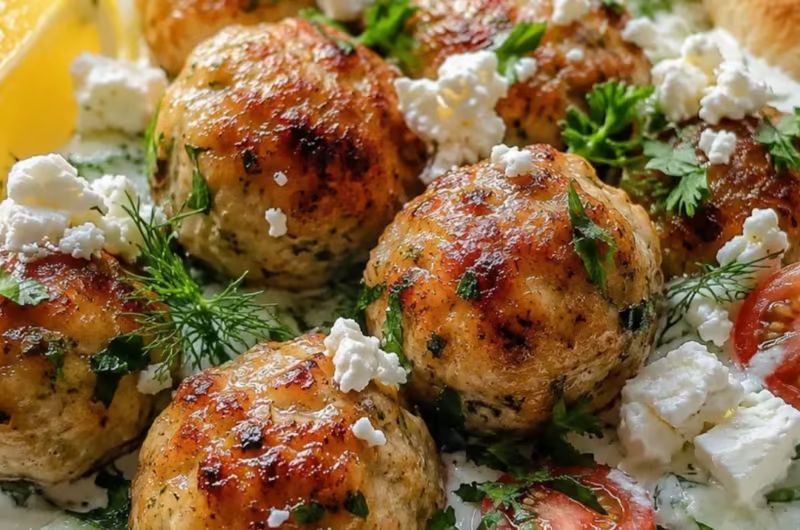
Juicy Greek Chicken Meatballs with Fresh Tzatziki
Course: Dinner DelightsCuisine: greekDifficulty: Medium4
servings20
minutes20
minutes40
minutesIngredients
- Chicken Meatball Ingredients
Ground chicken
1 lb
Thigh meat gives noticeably juicier results than breastGarlic, minced
2–3 cloves
Fresh is worth it here, not the jarred kindRed onion or shallot, grated
1/4 cup
Adds moisture and mild sweetnessFresh dill and mint, chopped
2 tbsp each
Dried herbs work in a pinch at 1/3 the amountFeta cheese, crumbled
1/3 cup
Optional, but it adds a salty richness worth keeping inBreadcrumbs or panko
1/3 cup
Swap for gluten-free panko if neededEgg
1 large
Acts as the binder holding everything togetherLemon zest
1 tsp
Brightens the whole mixtureDried oregano, salt, black pepper
To taste
Greek oregano has a stronger, more floral flavor than the standard grocery variety- Fresh Tzatziki Sauce Ingredients
Full-fat Greek yogurt
1 cup
Strained and thick — skip low-fat if you want real creaminessCucumber, grated and drained
1/2 cup
Draining is the step people skip, and it’s the one that matters mostGarlic, minced
1–2 cloves
Start with less if you’re serving raw-garlic-sensitive guestsFresh dill (or mint)
1 tbsp
Dill is more traditional, but mint works nicely tooFresh lemon juice
1 tbsp
Bottled juice tends to taste flat by comparisonExtra virgin olive oil
1 tbsp
Adds richness and rounds out the tangSalt
To taste
Add gradually and taste as you go
Directions
- Step 1 – Prep the Meatball Mixture
Grate your onion on the small holes of a box grater, then squeeze out the excess liquid with a paper towel or clean kitchen towel. This one move prevents the mixture from turning soggy while still delivering all that flavor and moisture into the meat.
Combine the ground chicken, garlic, drained onion, herbs, feta, breadcrumbs, egg, lemon zest, and seasoning in a large bowl. Mix gently with your hands or a fork — just until everything comes together. Overmixing compresses the proteins and leads to a dense, rubbery texture, which is the opposite of what you’re going for.
Once combined, cover the bowl and chill the mixture in the fridge for 10 to 15 minutes. This short rest firms up the fat, which makes shaping easier and helps the meatballs hold together during cooking. - Step 2 – Shape and Cook
Use a cookie scoop or a heaping tablespoon to portion the mixture into evenly sized balls, roughly 1.5 tablespoons each. Even sizing matters here — it means everything cooks at the same rate, so you’re not left with a mix of overdone and underdone meatballs.
From there, you have three solid cooking options, depending on your kitchen setup and how much cleanup you’re willing to deal with:
Pan-sear, then oven-finish.Brown the meatballs in a hot skillet with olive oil for 2–3 minutes per side, then transfer to a 400°F oven for 8–10 minutes to finish cooking through. This method gives you the best combination of crispy exterior and tender interior.
Bake only.Arrange the meatballs on a parchment-lined baking sheet and bake at 400°F for 18–20 minutes, flipping halfway. This is the lowest-effort route and works well for larger batches.
Air fry.Cook at 375°F for 12–14 minutes, shaking the basket around the halfway mark. This method uses the least oil and gives you a nicely browned exterior with minimal hands-on time. - Step 3 – Check Doneness
Chicken needs to reach an internal temperature of 165°F to be considered safely cooked, according to USDA food safety guidelines. A meat thermometer takes the guesswork out of this entirely, and it’s worth the ten seconds it takes to check.
Visually, properly cooked meatballs should be golden brown on the outside with no pink remaining in the center, but they should still feel slightly springy when pressed — not firm and dense, which usually signals overcooking.
A few extra tips for meatballs that stay juicy:
Don’t skip the grated, drained onion — it’s doing more work than you’d expect.
Resist the urge to overmix; a light hand here really does change the final texture.
Let the mixture chill before shaping, even if you’re in a hurry.
Pull the meatballs from the heat right when they hit 165°F rather than leaving them longer “just to be safe.”