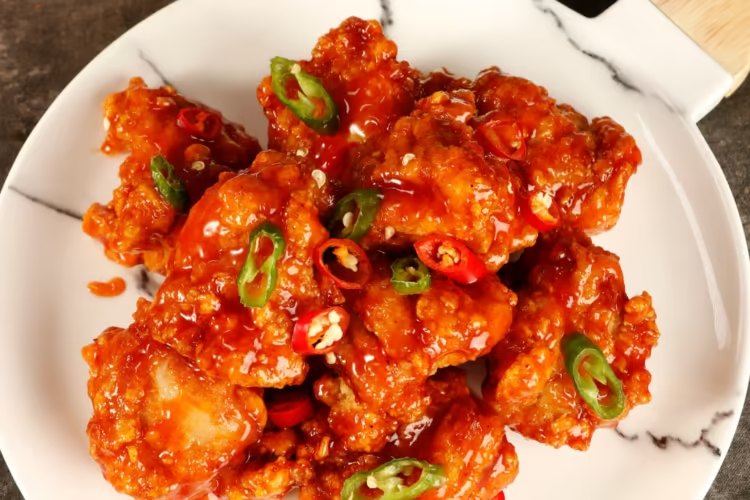
Picture this: it’s raining outside, you’ve had a rough week, and there’s a knock at your door. You open it to find a box of golden, glistening wings, still fogging up the plastic lid. You pull one out, and before you even taste it, you hear it — that unmistakable, glassy crunch. Underneath the crackling shell is chicken so juicy it practically steams. You reach for a cold drink, take a bite, and for a moment, nothing else matters.
That’s the pull of Korean fried chicken. It’s not just dinner. It’s a small ritual that turns an ordinary night into something worth remembering.
If you’ve ever wondered why this style of fried chicken has taken over food halls, delivery apps, and dinner tables far outside of Seoul, you’re in the right place. By the end of this guide, you’ll understand exactly what sets it apart, why the crust stays crisp long after American-style fried chicken would’ve gone soggy, which sauces you need to know, and how to recreate the magic in your own kitchen — no plane ticket required.
What Is Korean Fried Chicken?
At its core, Korean fried chicken is chicken that’s been fried twice, resulting in a shell so thin and crackly it practically shatters when you bite into it. Instead of the thick, craggy crust you’d get from a Southern-style flour dredge, you’re working with something closer to a light, glassy armor — one that’s built to hold up under a heavy coat of sauce without turning mushy.
What Makes It Different From American Fried Chicken
You might assume all fried chicken is basically the same recipe wearing different seasoning. It isn’t. Here’s what separates the two styles:
- The frying method. Korean fried chicken goes through the fryer twice, while most American fried chicken is fried once, low and slow.
- The coating. You’ll typically find potato starch or cornstarch instead of a thick, seasoned flour batter.
- The finish. Korean fried chicken is almost always glazed or tossed in sauce after frying, rather than served plain with gravy on the side.
- The cut. Smaller pieces — wings, drumettes, and boneless bites — are the norm, which helps the coating cook evenly and stay crisp.
Each of these choices exists for a reason, and once you understand the “why,” the “how” of making it at home gets a lot easier.
A Short History of Korean Fried Chicken
Good food rarely appears out of nowhere, and Korean fried chicken is no exception.
Origins in the Korean War Era
The roots trace back to the 1950s and ’60s, a period shaped heavily by the aftermath of the Korean War and the presence of American military bases. Fried chicken, along with frying oil and poultry access, gradually made its way into local cooking culture. Korean cooks took the concept and reshaped it — lighter, crunchier, and built to be shared.
The Rise of “Chimaek” Culture
Fast-forward a few decades, and you get the real cultural explosion: chimaek, a mashup of “chicken” and “maekju” (beer). Starting in the 1980s and accelerating through the 2000s, chains like Kyochon, BBQ Chicken, and bhc turned fried chicken and beer into a nightly social event across South Korea. Add in the global reach of K-dramas and K-pop — where chimaek scenes are practically a genre staple — and you’ve got a food trend that spread far past its home country.
The numbers back up what your feed has probably already shown you. Industry research pegs the global Korean fried chicken restaurant segment in the billions of dollars, with double-digit growth rates in fast-expanding regions like North America. South Korea itself is home to an enormous, fragmented market of fried chicken shops — tens of thousands of them — a sign of just how embedded this dish is in everyday life there.
Why Korean Fried Chicken Is So Crispy
This is the part most people actually care about: how does it stay so crunchy, even under a heavy, sticky sauce?
The Double-Fry Method Explained
The secret isn’t a magic ingredient — it’s technique. Here’s the basic sequence:
- First fry at a lower temperature (around 325°F) to cook the chicken through without over-browning it.
- Rest period where the chicken cools slightly, allowing steam to escape and the surface to firm up.
- Second fry at a higher temperature (closer to 375°F) to blast away remaining moisture and lock in that glassy, shattering crust.
That first fry does the heavy lifting on cooking the meat. The second fry is purely about texture — it’s what gives you the crunch that survives a sauce bath.
The Role of Starch-Based Batter
Swap flour for potato starch or cornstarch, and you get a coating with far less gluten. Less gluten means less chew and less density, which translates into a lighter, crisper shell instead of a heavy, bready one. This is a big part of why the crust holds its structure even after it’s coated in something wet and sticky.
Key crispy-crust factors to remember:
- Low-gluten coating (starch-based, not flour-heavy)
- Two separate fry cycles, not one
- Correct oil temperatures at each stage
- A genuine resting period between fries — don’t skip it
Popular Types of Korean Fried Chicken Sauces and Flavors
Once you’ve nailed the crunch, the flavor is where things get personal. Korean fried chicken isn’t a single flavor — it’s a whole menu of options, and knowing them will make you look like a regular the next time you order.
Yangnyeom (Sweet and Spicy Glaze)
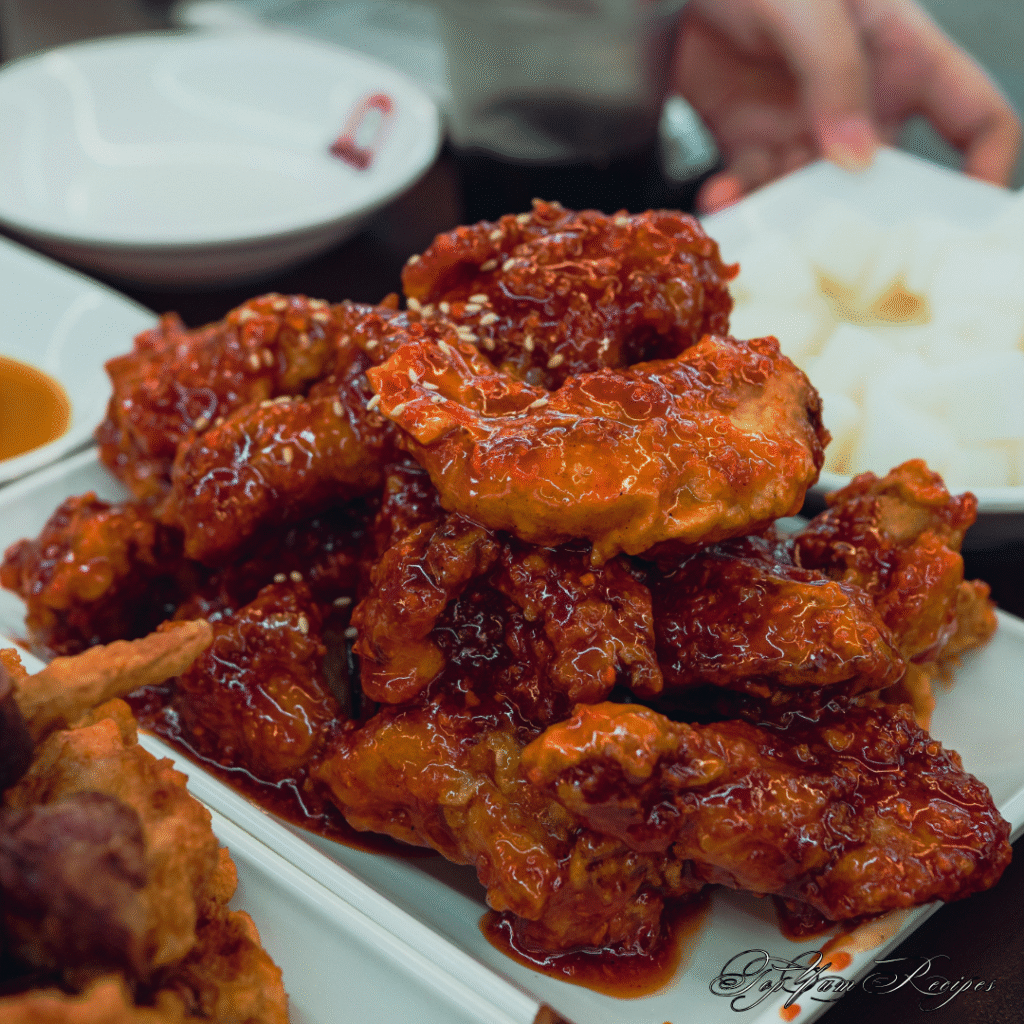
This is the flavor most people picture first: a glossy, red-orange glaze built from gochujang, garlic, and something sweet like honey or rice syrup. It’s sticky, a little fiery, and addictive in a way that makes it hard to stop at just one piece.
Ganjang (Soy Garlic)
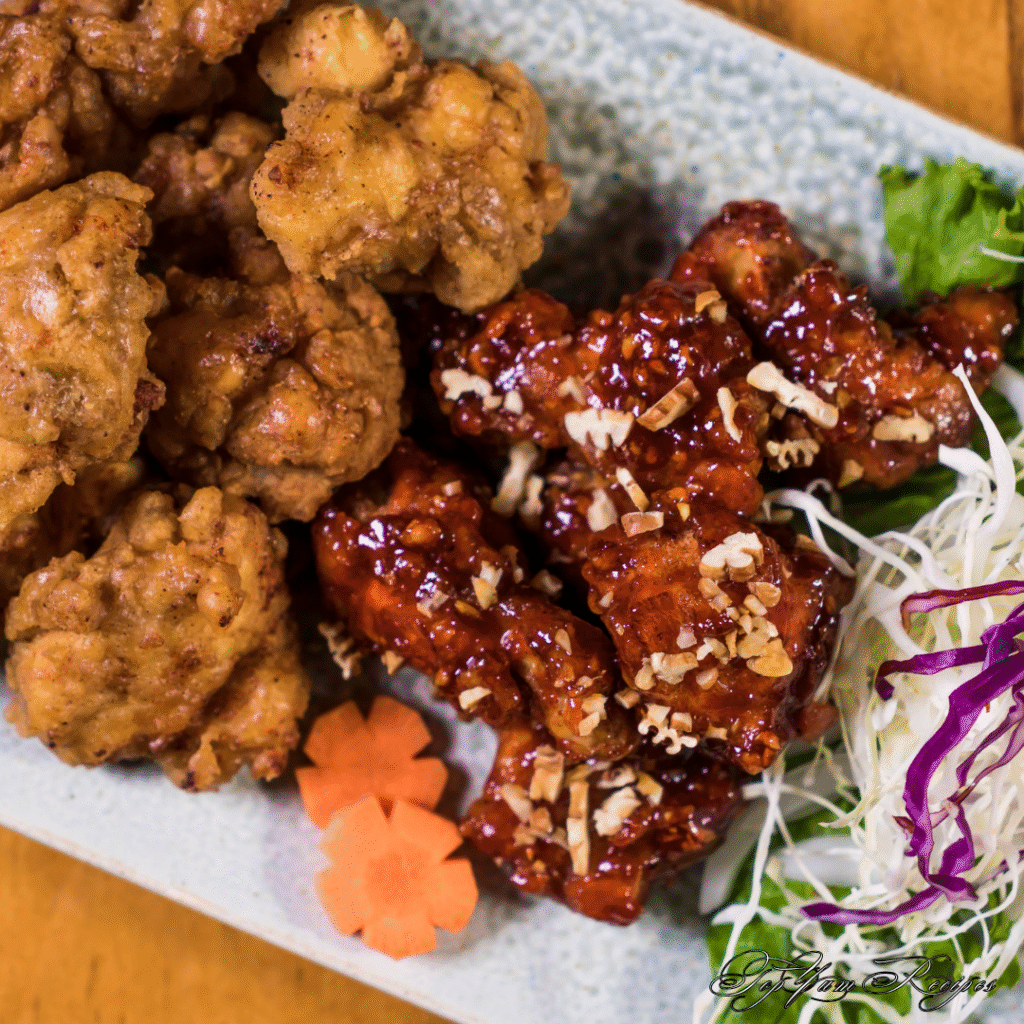
If spice isn’t your thing, ganjang chicken leans savory instead. Built on soy sauce, garlic, and a touch of sugar, it’s rich and umami-forward without any real heat, which makes it a great gateway flavor if you’re new to the category.
Original Crispy (Unsauced)
Sometimes the crust is the whole point. Plain, unsauced Korean fried chicken lets you taste that starch-based crunch in its purest form, usually with just a light salt seasoning.
Cheese-Topped and Fusion Variants
Modern menus have pushed things even further, layering on melted cheese, honey butter, or fusion spice blends that borrow from other cuisines entirely.
Quick flavor cheat sheet:
- Yangnyeom — sweet, spicy, sticky, pairs well with cold beer
- Ganjang — savory, garlicky, mild heat, great for spice-sensitive eaters
- Original crispy — plain, crunch-forward, best dipped rather than glazed
- Cheese/fusion — rich, indulgent, best shared
How to Make Korean Fried Chicken at Home
You don’t need a restaurant fryer or years of practice to pull this off. You just need the right ratios, a thermometer, and a little patience for that resting step.
Ingredients
| Ingredient | Amount | Notes |
|---|---|---|
| Chicken wings/drumettes | 2 lbs | Pat completely dry before starting |
| Potato starch (or cornstarch) | 1 cup | The backbone of your crispy crust |
| Salt and pepper | To taste | Used for dry-brining the chicken |
| Egg | 1 | Optional, adds extra crunch |
| Neutral frying oil | Enough to submerge | Peanut or vegetable oil works well |
| Soy sauce | 3 tbsp | Base for the sauce |
| Gochujang | 2 tbsp | For a yangnyeom-style glaze |
| Garlic, minced | 3 cloves | Sauce flavor base |
| Rice syrup or honey | 2 tbsp | Adds sweetness and glossy shine |
| Sesame oil | 1 tsp | Finishing touch |
Step-by-Step Instructions
- Pat your chicken completely dry, then season it with salt and let it sit for at least 20 minutes — this is your dry brine.
- Dredge each piece in the starch, shaking off any excess so you’re left with a thin, even coat.
- Fry in batches at around 325°F until the chicken is cooked through but only lightly golden.
- Pull the pieces out and let them rest on a wire rack for 5–10 minutes. Don’t skip this — it’s doing real work.
- Fry a second time at around 375°F until deeply golden and audibly crisp.
- Toss the hot chicken in your sauce of choice immediately, off the heat, so the crust doesn’t have time to soften.
Pro Tips for Extra Crunch
- Rest your chicken on a wire rack instead of paper towels — trapped steam is the enemy of crispiness.
- Never sauce the chicken while it’s still over heat; toss it off-heat and serve right away.
- If you’re making a big batch, keep fried pieces warm in a low oven on a rack rather than stacking them in a bowl.
Best Korean Fried Chicken Chains and Where to Try It
If cooking isn’t on your agenda tonight, there’s a good chance you can find the real thing nearby.
In South Korea
Names like Kyochon, BBQ Chicken, bhc, and Nene Chicken dominate the domestic scene, each with its own signature sauce and loyal following.
International Expansion
Outside of Asia, North America has become one of the fastest-growing markets for Korean fried chicken, with delivery platforms and dedicated storefronts making it easier than ever to order a box without leaving your couch.
What to order as a first-timer:
- A half-and-half combo (yangnyeom and ganjang) so you can compare flavors
- Pickled radish on the side — it’s the classic palate cleanser
- A drink pairing, whether that’s beer or something non-alcoholic, to round out the chimaek experience
Nutrition and Healthier Alternatives
Fried food is fried food, and it’s worth going in with realistic expectations — but there are ways to lighten things up without losing what makes this dish special. Nutrition
Calorie and Fat Considerations
A serving of sauced, double-fried wings will run higher in calories and fat than a baked or grilled alternative, largely due to the oil absorption from two fry cycles plus a sugar-heavy glaze.
Air-Fryer and Baked Versions
You can get surprisingly close to that signature crunch using an air fryer, especially if you stick with the starch-based coating and still do a two-stage cook — one lower-temp round, one higher-temp round.
Simple swaps if you’re watching intake:
- Air-fry instead of deep-fry
- Serve sauce on the side instead of tossing everything in it
- Choose leaner cuts, like boneless breast pieces, over wings
- Go easy on rice syrup or honey in your homemade sauce
FAQ About Korean Fried Chicken
What makes Korean fried chicken different from regular fried chicken? The biggest differences come down to a double-fry technique, a thinner starch-based coating, and a heavy sauce glaze applied after frying — all things that give Korean fried chicken its signature long-lasting crunch.
Is Korean fried chicken spicy? It depends on the sauce. Yangnyeom brings real heat thanks to gochujang, while ganjang (soy garlic) is mild and savory, and plain crispy versions have no heat at all.
What is chimaek? Chimaek is the Korean term for pairing fried chicken with beer, a social tradition that’s become one of the most recognizable parts of Korean food culture worldwide.
Can I make Korean fried chicken without a deep fryer? Yes. A heavy pot with a thermometer works fine for frying, and an air fryer can get you close to the same crunch with far less oil.
How do you reheat Korean fried chicken and keep it crispy? Skip the microwave. Reheat in an oven or air fryer at a high temperature for a few minutes — this re-crisps the crust instead of turning it soft and rubbery.
What sauce is most popular for Korean fried chicken? Yangnyeom (sweet and spicy) is generally considered the most iconic, though ganjang (soy garlic) runs a close second for those who want less heat.
Conclusion
At the end of the day, Korean fried chicken isn’t complicated — it’s just careful. Two fries instead of one. A lighter coating instead of a heavy one. A sauce that goes on at the very last moment. Small choices, big payoff.
Whatever brought you here — curiosity about the history, a craving you can’t shake, or a genuine plan to fry your own batch this weekend — you now know exactly what makes this dish worth the hype. So go ahead: heat up the oil, mix up a batch of yangnyeom sauce, and find out for yourself why an entire country built a tradition around chicken and beer.
Ready to try it yourself? Grab your ingredients, follow the steps above, and don’t forget to let that crust rest between fries — it’s the one step you really can’t skip. And if you make a batch, share how it turned out. Did you go sweet and spicy, or keep it savory with soy garlic? Your next favorite chicken night might be one recipe away.